
How to lead with confidence when you don't have all the answers?
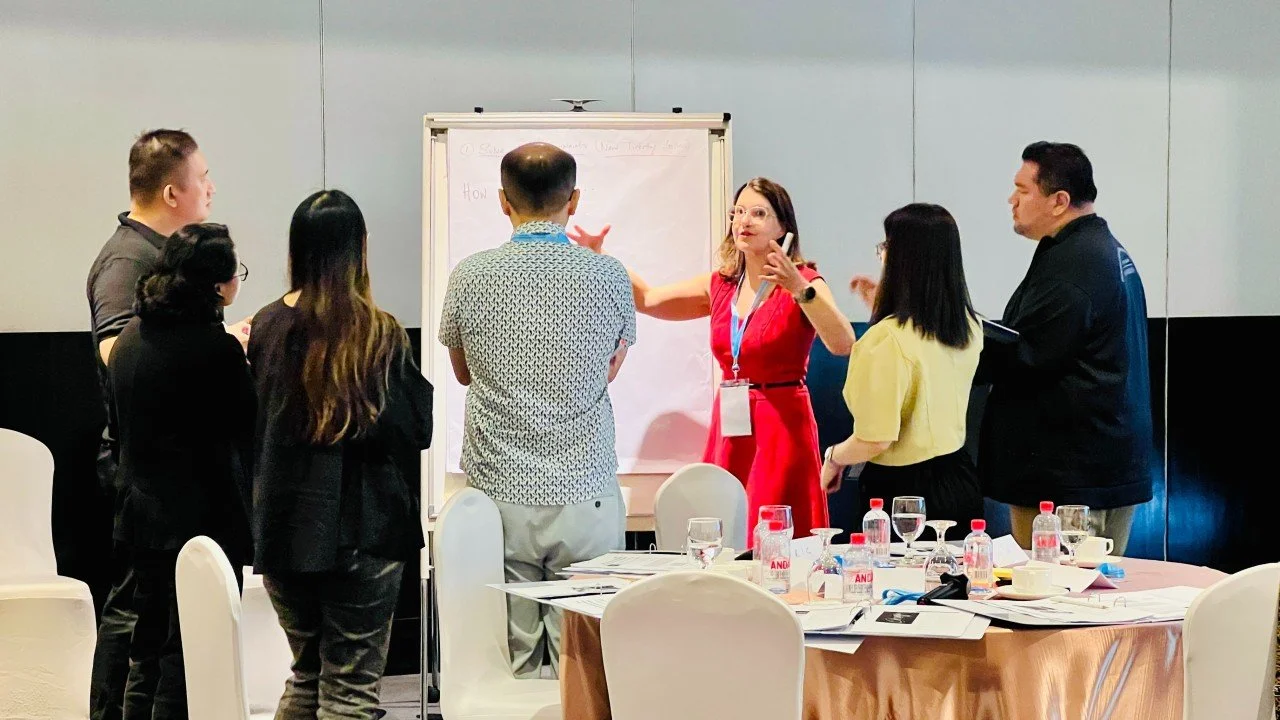
After five years of delivering Design Thinking and facilitated change programs across APAC, Europe, and Australia, I've noticed something that consistently separates confident leaders from those who struggle under pressure.
The leaders who drive the most successful transformations aren't always the ones with the deepest technical expertise.
They’re the ones who know how to facilitate complex problem-solving, and who are secure enough in themselves to guide others rather than needing to have all the answers.
This matters more than most leaders realise. Because one of the biggest confidence traps in leadership is the belief that you need to be the expert on everything. That if you don't have the answer, you're not qualified to lead.
Facilitation breaks that trap entirely.
Why is facilitation a confidence tool?
Complex transformation projects (system implementations, organisational restructuring, digital change) involve too many variables and too many stakeholders for any single leader to solve alone.
The challenge isn't having all the answers. It's getting the right people in the room to find answers together, then moving them toward implementation.
This is where facilitation becomes leadership. You're designing the process that surfaces real issues, asking questions that shift perspective, creating structure for teams to solve problems themselves, and maintaining focus on outcomes while allowing space for creative problem-solving.
When leaders facilitate well, something else happens too. Teams become more engaged because they're part of finding the solution, not just being told what to do.
Collective intelligence (the combined knowledge, experience and perspectives in the room) becomes accessible in a way it never is when one person drives all the answers. That’s not just good for the leader’s confidence. It’s transformational for the team.
When you can do this well, you don’t need to be the expert on everything. Your confidence comes from trusting the process, and trusting yourself to guide it.
What does confident facilitation look like in practice?
I've delivered Design Thinking programs for IT leaders facing real transformation challenges:
DevOps implementations, customer service operations failing under new systems, digital platforms creating more friction than flow.
These weren't training exercises. These were actual crises that needed solving.
My role wasn't to solve their problems. It was to design a process that let them solve the problems themselves.
By the end, they had 30-60-90 day action plans ready for implementation. More importantly, they had the capability to facilitate problem-solving in their own teams.
One program stands out: a complex organisational change where we used facilitated innovation approaches to turn strategy into sustained adoption.
We didn't deliver consultant recommendations. We created conditions for the client to figure out what would work for them.
The result: practices and playbooks they owned and could sustain long after we left.
That's facilitation as a leadership tool. Not running workshops for the sake of collaboration, but driving tangible transformation outcomes through structured problem-solving.
In transformation programs, facilitation looks like:
Stakeholder sessions that surface actual concerns rather than polite agreement.
Questions that help teams see problems from different angles.
Cross-functional collaboration that moves beyond territorial thinking.
Problem-solving that produces actionable plans, not just ideas.
You're not manufacturing consensus. You're creating conditions for genuine solutions to emerge from the collective expertise in the room.
Where do confident leaders struggle, and where does self-doubt creep in?
Many leaders have strong technical skills and strategic thinking, but they don't know how to effectively guide complex collaborative processes.
They can lead their own team, but facilitating cross-functional problem-solving feels less certain.
That uncertainty often shows up as self-doubt. Leaders start wondering whether they should have more answers, more expertise, more authority over the outcome.
They fill the space with their own opinions rather than holding it open for the room to do its best thinking.
This gap becomes critical during transformation. When you're implementing unfamiliar systems, navigating mergers, or restructuring organisations, your ability to facilitate becomes as important as your technical expertise.
If you're in a new role or leading change you haven't navigated before, facilitation gives you a way to lead effectively without pretending expertise you don't have. You're leveraging the knowledge in the room rather than trying to be the expert on everything.
If you're a seasoned leader with deep expertise, facilitation helps you scale impact. Instead of solving every problem yourself, you're building team capability to solve problems independently.
That’s how transformation becomes sustainable, and that’s how confident leadership actually looks from the outside.
How do you build facilitation as a leadership capability?
Facilitation isn’t innate. It’s a skill you develop through practice, and as it develops, so does your confidence as a leader.
Start with how you run project meetings.
Are you presenting updates and making decisions, or are you designing conversations that surface insights and drive collaborative problem-solving? That shift alone changes outcomes.
Apply facilitation principles to stakeholder management. Structure your interactions to understand diverse perspectives and find solutions that work across functions.
Use facilitation in crisis moments. When transformation hits obstacles, a program comes to a halt and you feel out of your depth to move things forward: bring the right people together and facilitate rapid problem-solving.
Each time you do this successfully, your confidence in your own leadership grows, not because you had all the answers, but because you created the conditions for the right answers to emerge.
What’s the real confidence shift leaders need to make?
Facilitation isn't a soft skill relegated to offsite workshops. It's a practical leadership tool that changes how teams engage, solve problems, and deliver results during complex change.
The leaders who drive successful transformation aren't trying to have all the answers. They're secure enough in themselves to create the conditions for answers to emerge from the collective intelligence of their teams.
And when teams experience that kind of leadership (being guided rather than directed, trusted rather than managed), engagement goes up. People bring more of themselves to the work.
The collective intelligence of the team becomes one of your greatest leadership assets, rather than something that sits untapped beneath the surface.
That’s confidence in leadership. Not knowing everything: trusting yourself enough to lead without needing to.
If this article resonated, there's a tool for you to move toward being a confident leader and facilitator right now.
It is a free 26-minute audio designed to take the brakes off.
Firstly it calms you down, then it disrupts the noise in your head and clears the way for new thinking.
Clients say they feel lighter and happier after listening. They start seeing opportunities they couldn’t see before, because they’ve stepped out of the entrenched patterns of thinking and doubting, holding back and worrying what might go wrong.
Instead of being overwhelmed, you start taking action. You work out what works, and adapt as you go, instead of being stuck and stopping before you’ve even started.

About the author
Sabine Lehner is an executive coach and hypnotherapist who works with female leaders and professionals ready to step into confidence and stop managing self-doubt, by changing what's actually driving it.
With a background of more than a decade leading large-scale organisational transformations across Australia, Europe, Asia and the US, and executive coaching since 2014, she brings corporate context from lived experience.
Through Turnaround Practice in Sydney, she combines strategic coaching with deep mindset work that enables the most effective solutions, because you can't think your way out of a subconscious pattern, and mindset work alone won't build your strategy.
